Choosing a telescopic loader vs wheel loader starts with one practical question: do you need to place material higher and further away, or move more of it through repeated loading cycles? A telescopic boom adds placement flexibility, while a conventional wheel loader is often the stronger fit for sustained bucket work.
Before making a selection, it is essential to clarify the terminology. A telescopic wheel loader combines a loader chassis with an extending boom. A telehandler is a related machine category, commonly designed around lifting and placing loads. Although buyers sometimes use “telehandler loader” for both, their digging capability, steering arrangements and attachment ratings can differ.
For this comparison, “telescopic loader” means a loader with an extending boom; “standard wheel loader” means a machine with conventional, non-extending loader arms.
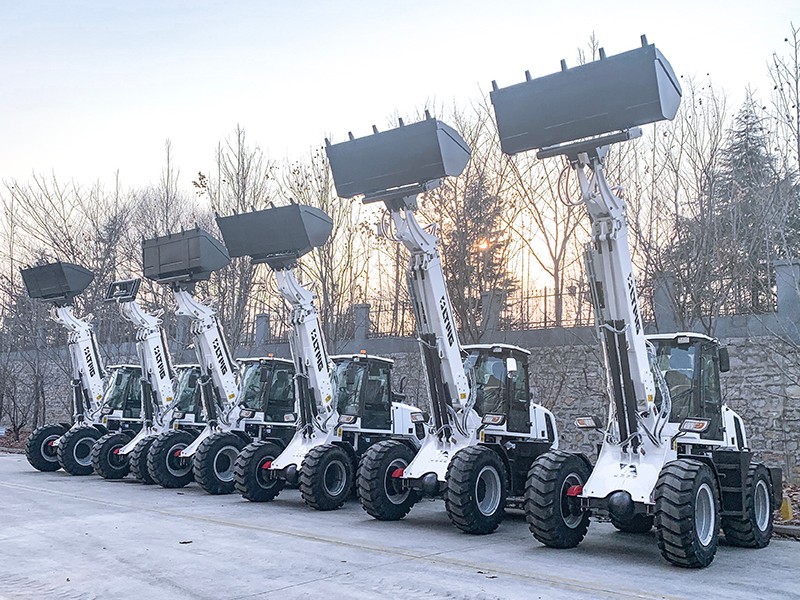
A telescopic loader uses nested boom sections that slide outward hydraulically. Raising the boom provides height; extending it adds forward reach. This can help position a pallet beyond an obstruction or discharge material into a container that conventional loader arms cannot comfortably reach.
However, maximum lift height does not mean maximum payload at that height—or at maximum forward extension. Moving a load further from the machine increases its overturning moment. The permitted load therefore depends on the boom position, attachment and operating configuration.
Before choosing a machine, check:
For example, loading over a tall trailer side requires enough clearance to tip the bucket and release material. A headline lifting-height figure alone does not establish that capability.
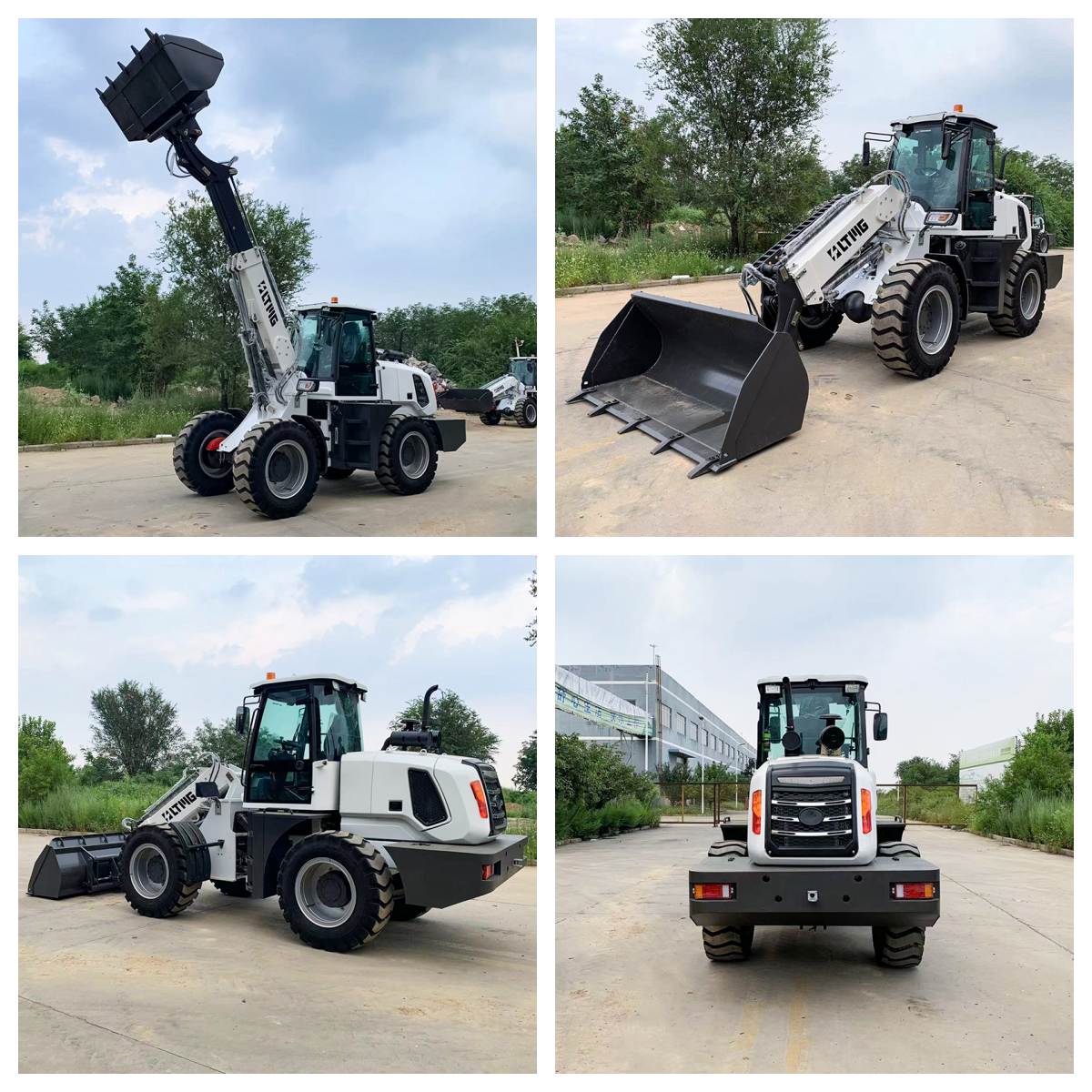
A standard wheel loader is often the better starting point when the main job is repeatedly filling a bucket, travelling a short distance and discharging into a truck or hopper.
Its advantage comes from a loading system designed around that cycle. Depending on the model, bucket geometry, breakout force, traction and hydraulic response can support productive work in stockpiles. An extending boom adds value only when the task needs its extra reach.
Compare equivalent machines rather than assuming every conventional loader is faster or carries more than every telescopic model.
|
Decision factor |
Telescopic loader |
Standard wheel loader |
|
Main strength |
Height and forward placement |
Repeated bulk loading |
|
Boom arrangement |
Extending sections |
Non-extending loader arms |
|
Capacity comparison |
Check capacity at required reach |
Check rated payload and attachment limits |
|
Bucket selection |
Match density and boom restrictions |
Match density, payload and loading duty |
|
Best productivity measure |
Loads placed at the required position |
Tonnes moved per operating hour |
Bucket volume also needs context. A large bucket suitable for lightweight feed may overload a machine when filled with dense aggregate. Compare material density and permitted payload alongside cubic metres.
When reviewing LTMG wheel loader options, shortlist machines by the material, loading height and daily workload before comparing bucket sizes.
Both machine types can support multiple attachments. The difference is how effectively each machine performs the intended task with an approved tool.
A matching quick coupler does not establish full compatibility. Attachment weight and geometry can reduce usable lifting capacity.
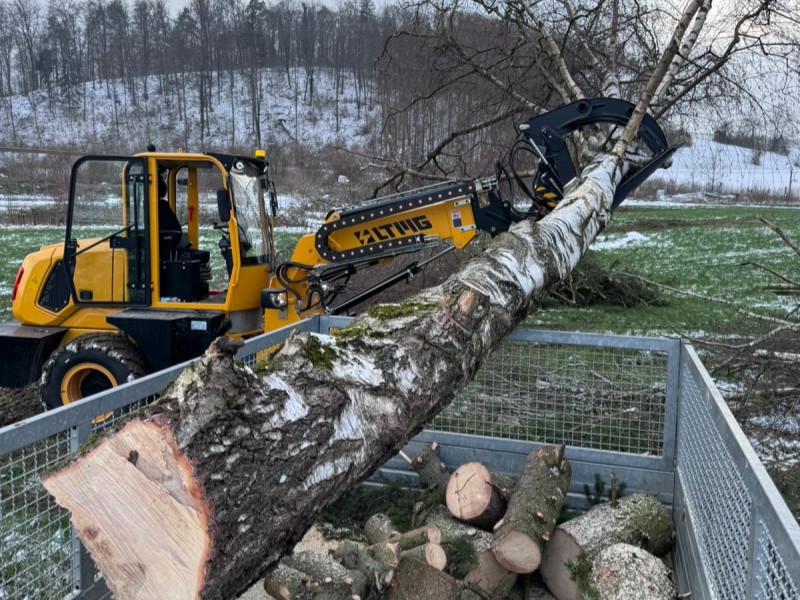
Common telescopic loader uses include handling bales, positioning bagged materials and loading feed into higher-sided containers. The extending boom is useful when placement height or an obstacle limits access.
A compact telescopic loader may suit buildings and yards where access is restricted. Check machine width, overall height, turning space and capacity at the required reach: a compact footprint does not guarantee a suitable lifting envelope.
For mainly ground-level handling of manure, soil or loose feed, a conventional wheel loader may meet the requirement with a simpler loading arrangement.
Telescopic equipment can help place palletised materials beyond the immediate unloading edge. However, neither extra reach nor fork fitment proves suitability for every lifting task. Load weight, ground conditions and the exact placement position remain decisive.
A standard wheel loader is often a practical choice for loading sand, gravel and other bulk materials where the truck or hopper is within its normal discharge envelope.
Where most working hours involve moving loose material through short, repetitive cycles, prioritise bucket filling, traction, cycle time and fuel consumption under representative conditions.
The choice becomes clearer when you identify the bottleneck. If the machine cannot reach the discharge point, extra reach matters. If it already reaches comfortably, loading productivity may matter more.
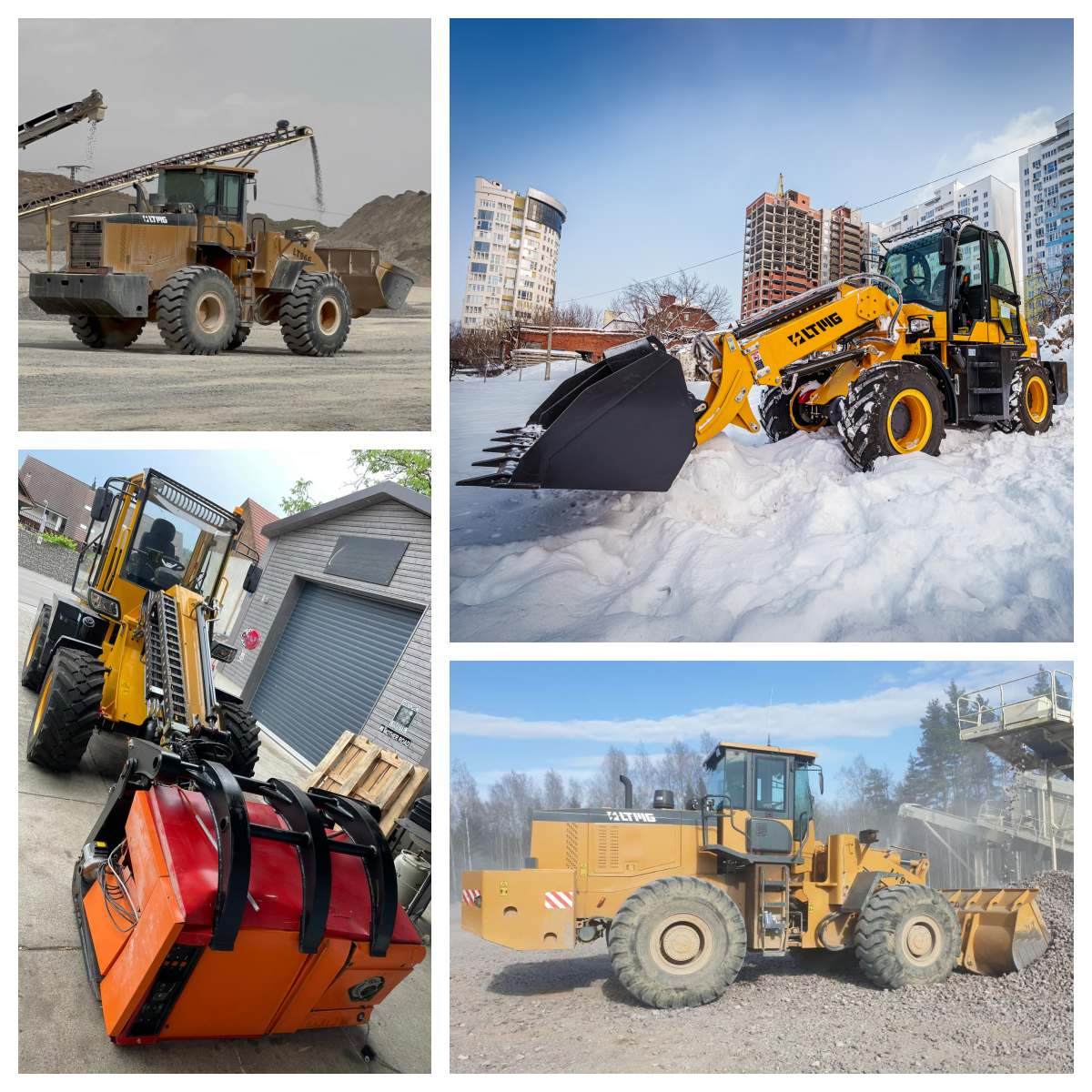
A universal ratio cannot be used to determine how much more expensive a telescopic loader will be. Purchase prices vary with machine size, lifting performance, drivetrain, attachments and local support arrangements. Compare quotations for configurations that complete the same job.
A telescopic boom introduces additional inspection and maintenance points, including sliding surfaces, wear pads and extension components. Conventional loaders still require attention to loader-arm pins, bushes, hydraulics, articulation joints, tyres and drivetrain components.
Assess ownership costs through five questions:
Occasional high-reach work may justify hiring a suitable machine instead of purchasing extra capability. Frequent placement work may support ownership, especially if one machine can complete several compatible tasks.
To obtain a useful quotation, provide LTMG with the heaviest load, material density, required height, forward reach, and expected working hours. Ask the sales representative to recommend a suitable configuration and provide the corresponding load capacity information.
It can handle pallets when equipped with manufacturer-approved forks and operated within the applicable load chart. This does not make it interchangeable with every forklift. Check load centre, fork capacity, visibility, ground conditions and operator training requirements.
There is no single typical height that reliably covers telescopic wheel loaders. Their lifting envelopes vary substantially by design and model. Request the exact machine’s maximum fork height, bucket dump height and capacity at your required reach rather than relying on a general category figure.
Check both, but base your selection on the permitted load at the actual working position. Rated capacity does not mean the machine can handle the same weight at every height and reach. Use the applicable load chart to confirm capacity for your load weight, required lift height, forward reach and attachment.

Tel : +86 195 5920 7570
Email : market@ltmg.com
WhatsApp : +86 195 5920 7570
Hinzufügen : LTMG Group, Electronics City(Xiamen) International Innovation Center, No.23, Duiying Road, Jimei District, Xiamen, China


Holen Sie sich die neuesten Produktinformationen und Angebotsinformationen



