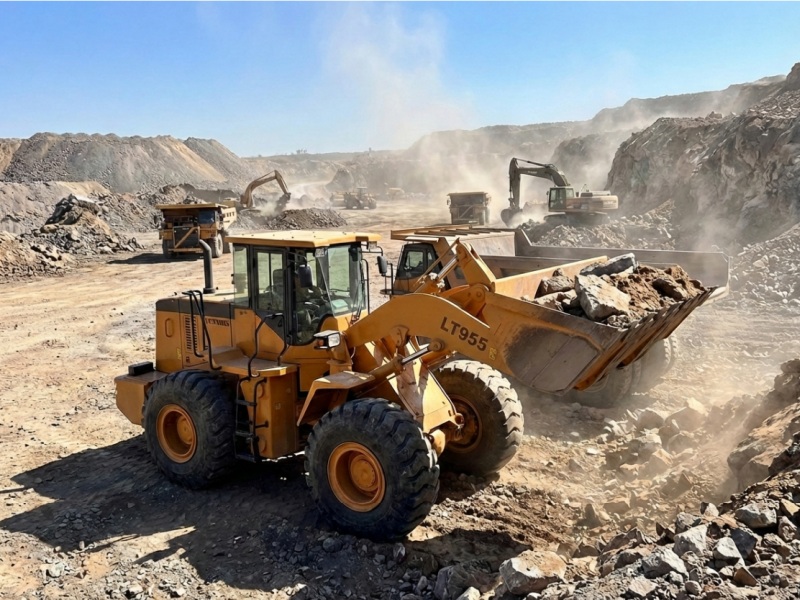
Radlader-Auswahlleitfaden: Das richtige Modell und die passende Tonnage für Ihre Industrieprojekte auswählen
Jan 05, 2026
Einleitung: Warum die Wahl des richtigen Radladers wichtig istIn der Schwermaschinenindustrie Radlader Die richtige Ausrüstung ist ein Grundpfeiler des Materialflusses. Die Wahl der passenden Ausrüstung kann die betriebliche Effizienz um über 30 % steigern. Umgekehrt führt eine Fehlauswahl häufig zu Gerätestillstand, unnötigen Beschaffungskosten und Projektverzögerungen.Dieser Leitfaden bietet eine umfassende Analyse von Radladermodellen, Tonnagen und verschiedenen Anwendungsszenarien. Ob Sie Bauleiter, Minenbetreiber oder Einkäufer für Baumaschinen sind – dieses Rahmenwerk hilft Ihnen, Ihre Investitionsrendite und Ihren Betriebserfolg zu maximieren. Grundlagenwissen: Radlader-Spezifikationen verstehen2.1 Definition und KernfunktionenEin Radlader ist eine vielseitige, auf Reifen montierte Erdbewegungsmaschine, die zum Aufnehmen, Transportieren und Abladen von Materialien mithilfe einer vorne montierten Schaufel konstruiert ist.Über die grundlegende Beladung hinaus gehören zu seinen industriellen Kernfunktionen:Schüttgutumschlag: Effizienter Transport von Sand, Kies, Erde und Kohle.Kurzstreckentransport: Er fungiert als wichtige Verbindung zwischen der Baustelle und dem Viehhof.Lagerhaltung und Sortierung: Unerlässlich für Logistik und Lagerverwaltung.Vielseitige Einsatzmöglichkeiten: Dank Schnellkupplungs-Anbaugeräten kann es Aufgaben wie Planieren, Einebnen und hydraulisches Abtragen übernehmen.2.2 Klassifizierung: Zuordnung von Modellen zur TonnageDas Verständnis des Klassifizierungssystems ist die Grundlage für die professionelle Beschaffung von Ausrüstung.Nach TragwerksplanungMaschinenkategorieTonnagebereichStrukturelle MerkmaleWichtigste VorteileTypische AnwendungenStandardlader3 - 8 TonnenTraditioneller GelenkrahmenAusgewogen und vielseitigAllgemeine Bau- und ErdarbeitenKompaktlader1 - 3 TonnenOptimiert für beengte RäumeKleiner Wendekreis; hohe MobilitätStädtische Versorgungs- und InnenjobsSchwerlastlader>10 TonnenVerstärkter TragrahmenHohe Nutzlast; extreme HaltbarkeitGroßflächiger Bergbau und Steinbruchbetrieb Durch die StromquelleStromartTonnageabdeckungKernvorteileTypische AnwendungenDieselbetriebenKomplettes SortimentHohes Drehmoment; einfaches BetankenAbgelegene Standorte und anspruchsvolle AufgabenElektro (EV)1 - 5 TonnenEmissionsfrei; geräuscharmLagerhallen und grüne ProjekteHybrid>5 TonnenOptimierte KraftstoffeffizienzHochfrequente Belastungszyklen LT9585-Tonnen-RadladerLT9101-Tonnen-RadladerLT9303-Tonnen-Radlader 3. Kernauswahlkriterien: Ausrüstung an Szenarien anpassen3.1 Branchenspezifische AnforderungenDie Auswahl eines Radladers erfordert ein umfassendes Verständnis der Arbeitsumgebung. Hier ist eine Übersicht der empfohlenen Tonnagen für verschiedene Branchen:Branche / SzenarioEmpfohlene TonnageWichtigste AuswahlkriterienWohnungsbau3 TonnenKompakte Bauweise, kleiner WendekreisInfrastrukturprojekte5 TonnenHohe Zyklusgeschwindigkeit, maximale SchaufelkapazitätBergbau (Tagebau)5 – 8+ TonnenRobuster Rahmen, hohe AusbrechkraftSteinbruch≥6 TonnenFelsspezifische Schaufeln, verstärkte ReifenLandwirtschaft und Viehzucht2 – 3 TonnenKorrosionsbeständigkeit, vielseitige BefestigungsmöglichkeitenLogistik & Lagerhaltung2 – 4 TonnenManövrierfähigkeit, elektrische Optionen für den InnenbereichStraßenbau5 – 6 TonnenGroßer Eimer, kontinuierliche Hochleistungsarbeit 3.2 Strategische BeschaffungsüberlegungenNeben der Tonnage sollten professionelle Käufer diese fünf Dimensionen berücksichtigen, um den langfristigen Wert sicherzustellen:Standortbeschränkungen und Mobilität:Ein Standard-5-Tonnen-Lader benötigt einen Wendekreis von etwa 6 Metern. Für enge städtische Bereiche sind Allradlenkung oder kompakte Knickgelenkmodelle der reinen Motorleistung vorzuziehen.Aufgabenkomplexität & Anhänge: Wenn die Arbeit verschiedene Aufgaben umfasst (z. B. Palettenhandling, Schneeräumung), sollten Lader mit hydraulischen Schnellwechslern bevorzugt werden. Dadurch wird aus einer einzelnen Maschine ein Multifunktionswerkzeug.Investitionen und Budgetierung:Der Preis eines Radladers ist zwar ein wichtiger Faktor bei Ihrer Kaufentscheidung, aber konzentrieren Sie sich auf die langfristige Rentabilität. Eine hochwertige Maschine von einem führenden Radladerhersteller mag zwar in der Anschaffung teurer sein, spart Ihnen aber über ihre Lebensdauer Tausende an Kraftstoff- und Reparaturkosten.Gesamtbetriebskosten (TCO): Der Kaufpreis ist nur die Spitze des Eisbergs. Achten Sie auf Kraftstoffeffizienz, Wartungsintervalle und die Verfügbarkeit von Ersatzteilen. Zuverlässige Marken bieten einen besseren Wiederverkaufswert, was ein entscheidender Faktor im Flottenmanagement ist.Flottensynergie: Die Ladekapazität des Radladers muss der Ladefläche Ihrer Muldenkipper entsprechen. Ein Ungleichgewicht (z. B. eine zu kleine Ladeschaufel für die Ladefläche des Muldenkippers) führt zu Engpässen und Kraftstoffverschwendung. 4. Häufige Fehler bei der Beschaffung von Radladern1: Überdimensionierung (Der Mythos „Größer ist besser“): Der Betrieb einer schweren Maschine nur mit 50 % Auslastung führt zu hohem Kraftstoffverbrauch und unnötigem Verschleiß. Ein Auslastungsgrad von 70 % bis 90 % ist optimal.2: Ignorieren von Umweltfaktoren: In Umgebungen mit hohem Salzgehalt, hoher Luftfeuchtigkeit oder hoher Staubbelastung sind spezielle Beschichtungen und Filtersysteme erforderlich. Werden diese umweltgerechten Optionen vernachlässigt, verkürzt sich die Lebensdauer der Maschine.3: Unterschätzung des Kundendienstes: Ein häufiger Fehler ist, den niedrigsten Preis eines Radladers der Langlebigkeit der Maschine vorzuziehen. Oft stammt das günstigste Angebot von einem nicht geprüften Radladeranbieter ohne lokales Servicenetz, was zu hohen versteckten Kosten führt, wenn die Maschine vor Ort ausfällt. 5. Schlussfolgerung: Die Logik der wissenschaftlichen SelektionEine erfolgreiche Beschaffung von Radladern erfordert ein ausgewogenes Verhältnis zwischen technischer Leistungsfähigkeit und Wirtschaftlichkeit.Um die beste Entscheidung zu treffen, sollten diese drei Säulen miteinander verknüpft werden:Modellauswahl: Bestimmt den technischen Ansatz und die Vielseitigkeit der Aufgaben.Tonnagebestimmung: Definiert die Grenzen von Produktivität und Effizienz.Szenarioanalyse: Identifiziert standortspezifische Einschränkungen und besondere Anforderungen.Bei komplexen Projekten empfehlen wir die Beratung durch einen Spezialisten für schwere Baumaschinen, um eine standortspezifische Simulation durchzuführen. Die Wahl der richtigen Ausrüstung ist nicht nur ein Kauf, sondern der erste Schritt zur Rentabilität des Projekts. Die Wahl eines seriösen Radladerlieferanten ist dabei genauso wichtig wie die technischen Daten der Maschine. Als führender Anbieter von Radladern mit jahrzehntelanger Branchenerfahrung bieten wir mehr als nur qualitativ hochwertige Geräte – wir bieten Effizienz.Sie sind sich nicht sicher, welche Tonnage für Ihre Baustelle am besten geeignet ist? Wir bieten Ihnen gerne eine kostenlose Baustellenlastanalyse und eine detaillierte Preisliste für Radlader, die auf Ihre Projektanforderungen zugeschnitten ist.